Gartner just released its annual hype cycle, a hypothesis of the coming trends.
Gartner's chart is based on the assumption that new technologies first get into a hype. Then the fall down, because the expectations were to high and the customers are disappointed. After that stage they reach a realistic level.
Believing his thesis the top topics in the next months are speech-to-speech translation. Internet-TV is still with google-TV at its very beginning.
Very interesting for me is that virtual worlds, first a big hype are reached the bottom of the expectations, so it seems to get up again.
Almost every company has a facebook-account. Some, especially in media have a twitter account too.
A few companies gave up their normal webpage and use only facebook, like the German version of the men's journal "FHM" with their site fhm-online.de.
Facebook with its possibility to embed pictures, galleries and videos seems to offer almost the same possibilities like a self-made homepage. And you can get a lot more direct feedback, word of mouth-marketing when you post funny or interesting things.
On the other hand it's a big step, to give up the own homepage totally. What if facebook blocks your site? What if facebook is down?
Back to the roots...
The argentine Agency Kamchatka goes even a step further and moved their homepage completely to twitter. It's sounds incredible, but it works far well, the handling and the structure of the site is easy understandable and you find all the necessary information. But I guess only an agency can move to such an extreme but very interesting step, might not working for a normal company...
The Dutch research organisationIMEC presented a new bodynetwork system, which can connect your organs with your mobile, and e.g. forward a message to your doctor. "The system converts IMEC's ultra-low-power electrocardiogram sensors into wireless nodes in a short-range network, transmitting physiological data to a hub – the patient's cellphone. From there, the readings can be forwarded to doctors via a Wi-Fi or 3G connection." (Graham Rohe, 2010)
This might be alarming, but if you are in a high-risk group for maybe heart-attacks, it can be really important to use those system.
They way the system works remembers me to the andruino-sensors, which are of course not as precise, but to get a general understanding how such things can be done it might be really useful.
Todays entry is again about google. But this time, very unusual, it's about google and cars. Yes, cars.
Like many universities and research companies google developed a car robot which can drive without any driver. And it drove about 140,000 miles...
Again, this development is not new, there were concepts like this even 10years ago. But it's the first time, that a private company, or better, a private internet company deals with the aspect of traffic. Then those robot cars are not only made for the driver, which can relax and read newspaper while his car is driving him to work, it will made the streets more secure. When central computers see, where all the cars are, traffic jams can dramatically be reduced, accidents will hardly happen...
But especially for me as German I have to ask the question if I really want the car drive for me, cause cardriving for me is not work but fun. If you have those robot in your car, there should be the possibility to turn it of, that you can drive by yourself....
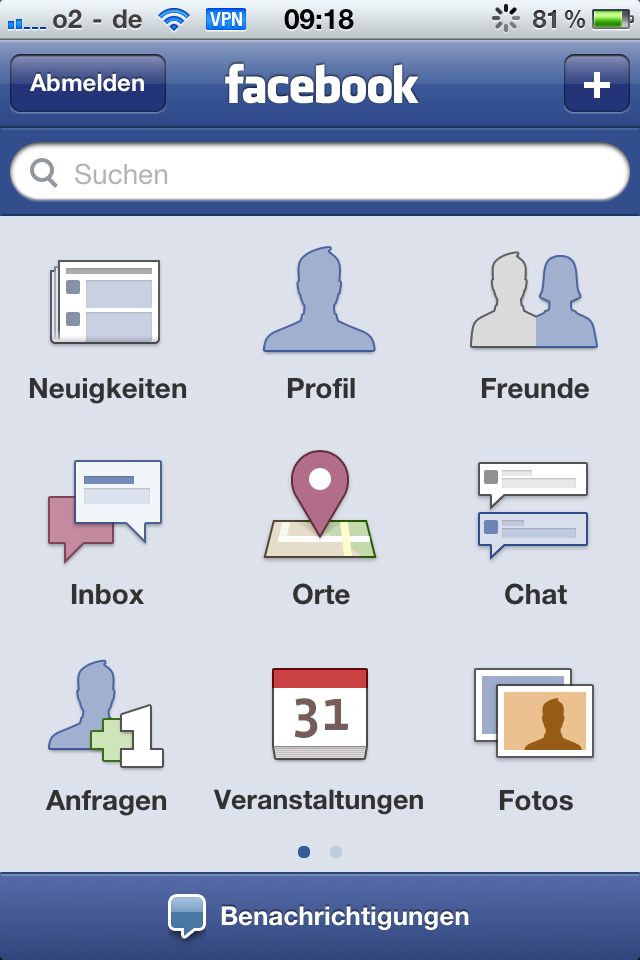
Todays emerging technologies deals with the start of the facebook-service "places"
Facebook places can show your friends in facebook, where you are right now by using the GPS data of your mobile.
The idea is not new, google started the same service called google latitude in February 2009. But until this week, it was more a service for nerds and internet freaks. With the start of facebooks places, the location based service will arrive millions of users, which use facebook with their mobile.
The importance of a special app using the possibilities of the mobile are at least as important as the development of the normal homepage.
Sometimes I really think I miss something, when I use facebook "just" with my browser...
The last week google started its new service street view all over Europe... All over Europe? No, the leading nation of privacy, Germany, still blocks this service, because thousands of house owners are concerned because of the privacy at their homes...
In other parts of Europe, e.g. in Cork, it's a really handy application...
Streetview in Cork. You can choose every point at the streets... (View this Example here)
...and navigate through the street, turn around and see every direction...
And in Germany?
No, the pictures are not live and yes, everyone else can make a picture of your house and put it in the internet. So that's what google is using at the moment. Their are even in my very small home town, which only has about 1,000 inhabitants dozens of single pictures which show you the streets, but not in the comfortable and smooth way like google street view does... So google linked them all into google maps, so it almost looks like street, but only almost...
In Germany you can also watch the streets, but only from several points. (View this example here)
The navigation on the streets is missing, therefor you can choose nearby pictures at the left corner.
At the end of the year google want to start the ''real'' streetview in Germany too.
Until that I use the censored version to view my village and get homesick...
As I'm a media economics I want to deal with the questions of micro payments today.
Still many distributers in the web have to problem, that they can't earn money with their products in terms of blog entries, videos, songs. Small pieces of content, users would pay for, but only small amounts below 1€, mostly only 10cent.
On the other hands it's difficult for banks to deal with such small amounts in a efficient way. The gap has to be filled by companies, who select those small payments and distribute them, when there is a bigger amount. Appstore/Itunes
The most successful example is for sure iTunes and the Appstore of apple. Most songs and apps are available for 0,99€. The registered user pays a monthly bill, depending from how much content he downloaded. The developer on the other hand get's 70% of the sales, when he reaches a sum of 200€ of income. Paypal
Another possibility is paypal. It's linked to your bank-account, so you can deposit money and then pay very small amounts for downloads. Flattr Flattr is a really new idea, used mainly for blogs, texts and articles. It works like the PRD for music, but on an volentary basis. Bloggers and Readers can register and pay a monthly fee. If you read an article and you like it, you can flattr it (if the blogwriter is also registered). At the end of the month, flattr counts, how many times the flattr button on your blog has been clicked and you get the sum of it on your bank account.
Flattr's problem so far is, that mainly bloggers registered for it. It's more a redistribution of money in the bloggers community. As you also have to pay is blogger, it's only a big deal for blogs with many readers, otherwise you will pay more then you earn.
But if also people outside of that community use flattr, it may become very successful.